
How to Plan Catering for Large Delaware Events
May 6, 2026
Planning food for a small dinner is one thing. Planning food for hundreds of guests at a wedding, conference, gala, school banquet, fundraiser, festival, or community celebration is a completely different operation.
When the guest count rises, every decision becomes more connected: menu choices affect staffing, staffing affects timing, timing affects guest flow, and venue logistics affect nearly everything.
To Plan Catering for Large Delaware Events successfully, organizers need more than a menu. They need a clear strategy for food quantity, serving style, setup, rentals, dietary needs, vendor communication, budget control, and event-day timing.
A beautiful meal can still feel stressful if guests wait too long, buffet lines become crowded, food runs low, or staff do not know where to stage equipment.
Large event catering also requires local awareness. Delaware events may take place in hotel ballrooms, barns, beach-area venues, schools, churches, corporate campuses, parks, private estates, banquet halls, and community centers.
Each location comes with its own rules, kitchen access, parking limits, loading areas, alcohol policies, weather considerations, and cleanup requirements.
This guide walks through the practical steps of Delaware event catering planning, from estimating attendance and choosing a service style to building a menu, managing staff, reviewing contracts, and avoiding common mistakes.
Whether you are planning corporate event catering, wedding catering planning, banquet catering, or a large nonprofit gathering, the right preparation helps protect your budget and improve the guest experience.
Why Large Event Catering Requires Detailed Planning
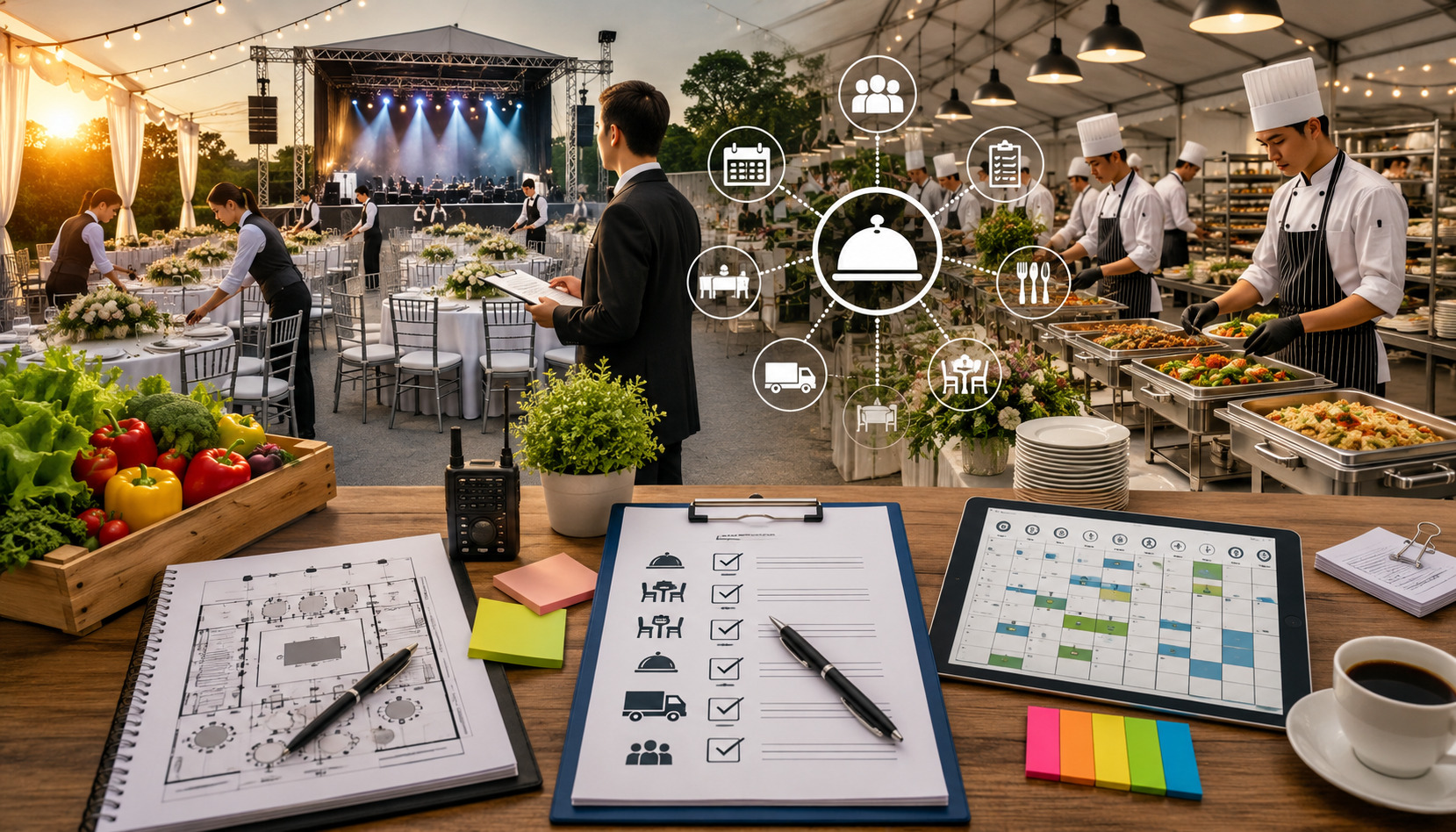
Large event catering involves far more than ordering enough food. A caterer must understand how guests will arrive, where they will gather, how quickly they need to be served, where food will be prepared, how long hot items can be held safely, and how staff will move through the venue without interrupting the event.
These details become especially important when the event includes speeches, entertainment, awards, dancing, fundraising moments, or a strict venue end time.
Guest flow is one of the biggest differences between small and large gatherings. At a casual party with 25 people, guests can serve themselves slowly and still feel comfortable. At an event with 250 guests, a poorly placed buffet can create bottlenecks near entrances, bars, restrooms, or dance floors. That affects not only the meal but also the overall energy of the event.
Food timing also becomes more complex. Hot entrees, chilled salads, passed appetizers, desserts, coffee service, and late-night snacks may each require separate staging and staffing.
If the kitchen is far from the dining area, transportation time must be included in the schedule. If the venue has limited prep space, some items may need to be prepared off-site and finished on location.
Communication is equally important. The caterer may need to coordinate with the venue manager, rental company, florist, DJ, photographer, security team, transportation provider, and event planner. A delay in one area can affect the entire food service plan.
Step 1: Define the Event Size and Catering Goals
The first step in catering for large Delaware events is defining what the event actually needs to accomplish. A corporate awards dinner has different catering goals than a wedding reception, school fundraiser, conference lunch, outdoor festival, or community banquet.
Some events need fast, efficient service. Others need a more formal dining experience. Some require flexible food stations because guests arrive in waves, while others need a seated meal served at the same time.
Start with the basics: event type, estimated attendance, venue, date, schedule, guest demographics, and service expectations. Then think about the guest experience.
Should the meal feel elegant, casual, festive, efficient, family-friendly, or upscale? Do guests need to eat quickly before returning to sessions? Will they be standing, seated, networking, dancing, or moving between spaces?
This early planning helps caterers provide accurate recommendations. Without clear goals, quotes may vary widely and become difficult to compare.
One caterer may price a buffet with limited staffing, while another may include full setup, servers, bartenders, rentals, linens, and cleanup. Both proposals may seem similar at first glance, but they represent very different levels of service.
For more general event preparation, a useful resource is this catering checklist for Delaware events, which covers timelines, staffing, menus, and day-of planning considerations.
| Planning Factor | Why It Matters | Questions to Consider |
| Guest count | Drives food quantity, staffing, rentals, and budget | How many invited guests are expected to attend? |
| Event type | Shapes menu style and service expectations | Is this a wedding, gala, conference, banquet, or community event? |
| Venue layout | Affects buffet placement, kitchen access, and guest flow | Where will food be staged, served, and cleared? |
| Service style | Impacts timing, labor, and cost | Will service be buffet, plated, stations, cocktail-style, or family-style? |
| Dietary needs | Protects guest safety and satisfaction | Are there vegetarian, vegan, gluten-free, dairy-free, or allergy-sensitive guests? |
| Schedule | Determines prep, service, and cleanup timing | When do guests arrive, eat, and leave? |
| Rentals | Supports seating, service, and presentation | Are tables, chairs, linens, plates, glassware, and serving equipment included? |
| Budget | Prevents surprises and scope creep | What total amount is available for food, labor, rentals, and extras? |
Estimate Guest Count Accurately
Accurate guest count planning is one of the most important parts of event food planning. Guest count affects almost every catering decision, including portion sizes, staff levels, table settings, buffet lines, beverage quantities, dessert counts, bar setup, rental needs, and final pricing. Even a small percentage change can create a major difference at scale.
For example, an increase from 200 to 230 guests may require more food, another buffet station, extra servers, additional plates, more trash handling, and a longer service window. A decrease can also affect minimums, staffing commitments, and contract terms.
That is why planners should track invited guests, RSVPs, expected walk-ins, vendors who need meals, speakers, volunteers, staff, and children separately.
Do not rely only on the invitation count. Use historical attendance if the event happens annually. For weddings, review the RSVP deadline and final guarantee date carefully. For fundraisers, schools, and community events, plan for last-minute changes and communicate updates to the caterer as early as possible.
Match Catering Style to the Event
Choosing the right service style is just as important as choosing the menu. Buffet catering, plated catering, food stations, cocktail-style service, and family-style meals all work differently for large event catering Delaware planners. Each option affects cost, timing, staffing, presentation, and guest movement.
Buffets are popular for large gatherings because they offer variety and can feel relaxed. However, they need careful line management, enough serving utensils, clear menu labels, and sometimes duplicate stations to prevent long waits.
Plated meals feel more formal and controlled, but they require more servers, accurate entrée counts, seating charts, and a tighter timeline.
Food stations can work well for networking events, receptions, and celebrations where guests move around. They spread traffic across the room and allow menu variety, but they also require more space and staff. Cocktail-style service can be efficient for shorter events, though planners must ensure food is substantial enough if the event overlaps with a normal meal period.
Family-style service creates a warm, shared-table experience, but it requires enough table space for platters, serving pieces, glassware, centerpieces, and guest comfort. The best choice depends on the event’s tone, schedule, budget, venue layout, and guest expectations.
Step 2: Set a Realistic Catering Budget
A realistic budget is essential when planning Delaware catering services for large events. Food is only one part of the total cost. Large events may also require service staff, chefs, bartenders, delivery, setup, cleanup, rentals, linens, china, flatware, glassware, serving equipment, beverage stations, trash removal, overtime, taxes, gratuity, and contingency funds.
Many planners make the mistake of setting a per-person food budget without considering the complete service model. A buffet with disposable plates has a very different cost structure than a plated dinner with china, servers, bartenders, passed appetizers, coffee service, and late-night snacks. Both can be appropriate, but they should not be compared as if they are the same.
Budget planning should begin with priorities. Decide what matters most: menu quality, speed of service, formal presentation, bar options, local ingredients, dietary flexibility, or guest variety. Then decide where you are willing to simplify. For example, you may choose fewer entrée options to afford better staffing, or select a buffet instead of plated service to support a larger guest count.
Also include a contingency amount. Large events often change. Guest counts rise, weather shifts, rental needs expand, venues add requirements, or timelines run longer than expected. A contingency helps prevent last-minute stress.
Understand What Is Included in Catering Quotes
Catering quotes can vary significantly because companies structure pricing differently. Some quotes include only food and basic delivery. Others include event staff, setup, breakdown, linens, serving equipment, rentals, beverage service, and coordination time. When comparing quotes, look beyond the headline price.
Ask whether the quote includes staff arrival time, setup labor, service time, cleanup, travel, delivery, kitchen equipment, buffet equipment, cake cutting, coffee service, water service, trash handling, and overtime.
Also confirm whether rentals are included or estimated separately. Large events often require more than food pans and serving spoons; they may need chafers, sternos, carving stations, risers, trays, bus tubs, speed racks, beverage dispensers, portable bars, and prep tables.
Review the payment schedule, deposit amount, final guest count deadline, cancellation policy, menu change policy, and overtime rate. A helpful reference for reviewing terms is this guide to Delaware catering contracts.
Hidden charges are not always intentional. Sometimes they happen because the planner did not provide full venue details or because the event scope changed. The more complete your information is, the more accurate the proposal will be.
Plan for Unexpected Costs
Unexpected costs are common in large event catering because many details depend on guest count, venue rules, weather, timing, and vendor coordination. Outdoor events may need tents, generators, flooring, portable refrigeration, water access, lighting, or backup service areas.
Venues with limited kitchens may require additional equipment or off-site preparation. Events with tight schedules may need more staff to serve guests quickly.
Weather can also affect costs. A sunny outdoor buffet may work beautifully, but rain, wind, heat, or cold can require a different setup. Coastal and outdoor Delaware venues may need stronger contingency planning because food service areas must remain safe, accessible, and protected.
Guest count changes are another common budget issue. If attendance increases close to the event, the caterer may need to order more food, schedule more staff, and adjust rentals. If guests stay longer than expected, overtime may apply. If speeches or entertainment delay dinner service, staff may remain on-site longer.
Build a contingency line into the budget rather than hoping everything stays fixed. For many large events, a small reserve can protect the overall experience and reduce rushed decisions.
Step 3: Choose the Right Delaware Catering Services
Choosing the right caterer is one of the most important decisions in large event planning. Food quality matters, but capacity matters just as much. A caterer who does excellent small private dinners may not have the staffing, equipment, transportation, or coordination systems needed for a 300-person banquet or multi-hour corporate event.
When comparing Delaware catering services for large events, look for experience with events similar in size, venue type, and service style. Ask about staffing, menu flexibility, food safety processes, backup plans, communication habits, insurance, licensing, and day-of leadership. Reviews and photos can be helpful, but they should not replace operational questions.
Strong caterers ask detailed questions before giving final recommendations. They want to know the venue layout, guest count, service schedule, load-in access, power availability, water access, kitchen rules, rental plan, bar needs, dietary restrictions, and event timeline. That curiosity is a good sign. It means they are thinking beyond the menu.
If you are still comparing options, this resource on how to choose the right caterer in Delaware can help organize your evaluation process.
Ask About Experience With Large Events
Experience matters because large events leave less room for improvisation. Weddings, corporate banquets, conferences, festivals, galas, fundraisers, school events, and community celebrations each have different service pressures.
A wedding may require careful coordination with photos, speeches, first dances, and dessert service. A conference may require fast meal turns between sessions. A fundraiser may need dinner service to align with auctions, presentations, and donor recognition.
Ask caterers how many guests they regularly serve, what types of venues they work in, and how they manage timing for large groups. Request examples of similar events, not just general testimonials.
A caterer who has handled banquet catering for 400 guests will understand service pacing, staging, staff assignments, and backup planning differently than one who mostly handles small parties.
Also ask about transportation and food holding. For large events, food may be prepared in stages, transported in insulated carriers, finished on-site, or held in warming equipment. The caterer should be able to explain how food quality and safety are maintained from kitchen to plate.
Review Staffing and Coordination Capabilities
Catering staff management is one of the biggest drivers of event success. Even excellent food can disappoint guests if there are not enough servers, bartenders, bussers, kitchen assistants, or setup crew members. Staffing affects wait times, buffet cleanliness, drink service, plate clearing, trash control, and the overall feeling of hospitality.
Ask how staffing levels are calculated. A plated meal usually requires more servers than a buffet. A bar-heavy reception may need additional bartenders and barbacks. A venue with long distances between kitchen and dining areas may need more runners. An event with multiple food stations requires attendants at each station.
Also confirm whether the caterer provides an on-site captain or event lead. This person should coordinate staff, communicate with the planner, monitor the timeline, handle small problems, and keep service moving. Without a clear lead, questions may fall on the host at the worst possible time.
For large events, staffing is not the place to cut too aggressively. Saving on labor can lead to long lines, cold food, messy tables, delayed cleanup, and frustrated guests.
Step 4: Build a Large Event Catering Menu
A large event menu should balance guest enjoyment with operational efficiency. The food should fit the event style, but it also needs to hold well, serve quickly, accommodate dietary needs, and work within the venue’s limitations.
A menu that sounds impressive on paper may not be practical if it requires too much last-minute cooking, delicate plating, or complicated customization for hundreds of guests.
Start by identifying the meal period. Breakfast, brunch, lunch, cocktail hour, dinner, dessert reception, and late-night service all call for different portion sizes and timing. Then consider the guest profile.
Corporate attendees may prefer efficient, easy-to-eat meals. Wedding guests may expect a more celebratory menu. School and community events may need family-friendly options. Fundraisers may need food that feels elevated without slowing down the program.
Seasonality also matters. Lighter menus may work well for warm-weather outdoor events, while heartier options may suit formal banquets or colder months. For outdoor events, avoid items that wilt quickly, melt easily, or require delicate temperature control unless the caterer has a strong plan.
A good large event menu usually includes variety without becoming overwhelming. It should offer familiar choices, balanced proteins, vegetable-forward sides, clear dietary options, and service-friendly formats.
Simplify the Menu Without Reducing Quality
A simple menu does not mean a boring menu. In large event catering, simplicity often improves quality because the kitchen and service team can focus on consistency. Too many entrée choices, custom toppings, complicated sauces, or made-to-order elements can slow service and increase the chance of mistakes.
For plated catering, limit entrée selections and collect meal counts early. For buffet catering, choose dishes that replenish well and look appealing throughout service. For stations, design each station around a clear theme so guests understand their options quickly. For cocktail-style events, choose passed and stationed items that are easy to eat while standing.
Simplification also helps with dietary planning. A menu with naturally vegetarian, gluten-free, or dairy-free components can serve more guests without requiring many separate special meals. Clear labeling further reduces confusion and helps guests make safe choices.
Quality comes from thoughtful execution: good ingredients, proper seasoning, correct temperature, attractive presentation, and smooth service. A focused menu gives the catering team a better chance to deliver those details at scale.
Plan for Dietary Restrictions and Allergies
Dietary restrictions must be addressed early in the planning process. Vegetarian, vegan, gluten-free, dairy-free, nut-free, shellfish-free, and allergy-sensitive options should not be treated as last-minute add-ons. For large events, even a small percentage of guests with dietary needs can represent many individual meals.
Ask guests about dietary restrictions during RSVP collection whenever possible. Share that information with the caterer before the final menu is confirmed.
The caterer should explain how special meals will be prepared, labeled, stored, served, and protected from cross-contact. This is especially important for buffets, where serving utensils can be moved between dishes by guests.
Menu labeling should be clear and visible. Labels can identify vegetarian, vegan, gluten-free, dairy-free, and common allergen concerns. However, labels should not overpromise unless the caterer can support the claim through safe preparation methods.
For plated events, consider place cards or meal indicators so servers know who receives each special meal. For buffets, place dietary-friendly items in logical locations and make sure staff can answer basic ingredient questions.
Step 5: Coordinate Venue Logistics and Event Flow
Venue logistics can make or break large event catering. The menu, staffing plan, and timeline must all work within the physical space. Before finalizing details, confirm kitchen access, prep areas, loading zones, parking, elevators, stairs, power outlets, water access, refrigeration, trash disposal, restrooms, guest seating, bar placement, and service routes.
Some venues have full commercial kitchens. Others have warming kitchens, small prep rooms, or no kitchen at all. Some allow open flames, while others restrict them. Some provide tables and chairs, while others require outside rentals. Some have strict load-in windows or noise restrictions. These details affect both cost and execution.
Guest movement should be planned carefully. Food stations should not block entrances, exits, restrooms, bars, or high-traffic walkways. Buffet lines should have enough space for guests to queue comfortably. Bars should be placed where they support flow instead of creating crowding.
Think about staff movement too. Servers need paths to carry trays, clear plates, refill stations, and reach back-of-house areas. If the only route crosses a dance floor or stage area, service will become difficult.
Coordinate With Vendors and Venue Staff
Large events depend on teamwork. Caterers often share the same space and timeline with rental companies, florists, DJs, photographers, decorators, security teams, transportation vendors, and venue staff. If these vendors work separately without coordination, problems can happen quickly.
For example, a florist may need tables before the caterer can set linens. The rental company may need access before food setup begins. The DJ may need power near the same wall where the caterer planned a coffee station. The photographer may need dinner service timed around sunset portraits. The venue manager may require cleanup by a specific time.
Create a shared timeline and distribute it to key vendors. Include load-in times, setup deadlines, guest arrival, cocktail hour, meal service, speeches, dessert, bar closing, cleanup, and vendor departure. Identify one main point person for event-day questions so the host is not interrupted constantly.
Caterers should also know whether vendors need meals. Photographers, DJs, planners, security staff, and entertainers often work long shifts. Vendor meals should be counted separately from guest meals and served at a time that does not interfere with their responsibilities.
Create a Detailed Catering Timeline
A detailed catering timeline keeps the event organized. It should include staff arrival, equipment unloading, kitchen setup, buffet or station setup, bar setup, guest arrival, appetizer service, dinner service, dessert service, coffee service, late-night snacks, cleanup, rental breakdown, and final departure.
The timeline should also account for event programming. Speeches, awards, dances, performances, auctions, and presentations can affect when guests are available to eat.
If dinner is delayed by 30 minutes, hot food may need to be held longer and staff schedules may shift. If guests are released to a buffet all at once, service may slow down unless enough stations are available.
Build in buffers. Large events rarely move exactly on schedule. Guests arrive late, photos run long, speakers talk longer than expected, and weather can change plans. A realistic timeline allows the caterer to adapt without compromising food quality.
Confirm who has authority to approve timing changes on event day. The caterer should not have to guess whether to start dinner if speeches are running late. A designated planner or point person should make those calls.
Staffing Strategies for Large Delaware Events

Staffing is one of the most important parts of large event catering Delaware organizers should discuss in detail. The right number of staff members helps food service feel smooth, tables stay clean, buffet lines move, bars remain stocked, and guests feel cared for. Understaffing can create long waits, cluttered tables, cold food, empty beverage stations, and rushed cleanup.
Staffing needs depend on service style. Plated meals usually require more servers because dishes must be delivered and cleared efficiently. Buffets may need fewer table servers but more attendants to replenish food, manage lines, keep stations clean, and answer questions.
Cocktail-style receptions require tray-passing staff, bar staff, bussers, and station attendants. Banquet catering may need a captain, kitchen lead, servers, runners, bartenders, and breakdown crew.
Venue layout also affects staffing. A ballroom with a nearby kitchen may be easier to service than a tented event with a remote prep area. Multiple floors, elevators, long hallways, outdoor paths, or limited parking can increase labor needs. Guest demographics matter too. Events with older guests, children, or VIP attendees may require more attentive service.
Do not evaluate staffing only by cost. Labor is what turns a catering order into a complete guest experience. Ask the caterer how many staff members they recommend, what roles they will perform, when they arrive, when they leave, and who supervises them.
Common Catering Mistakes to Avoid for Large Events
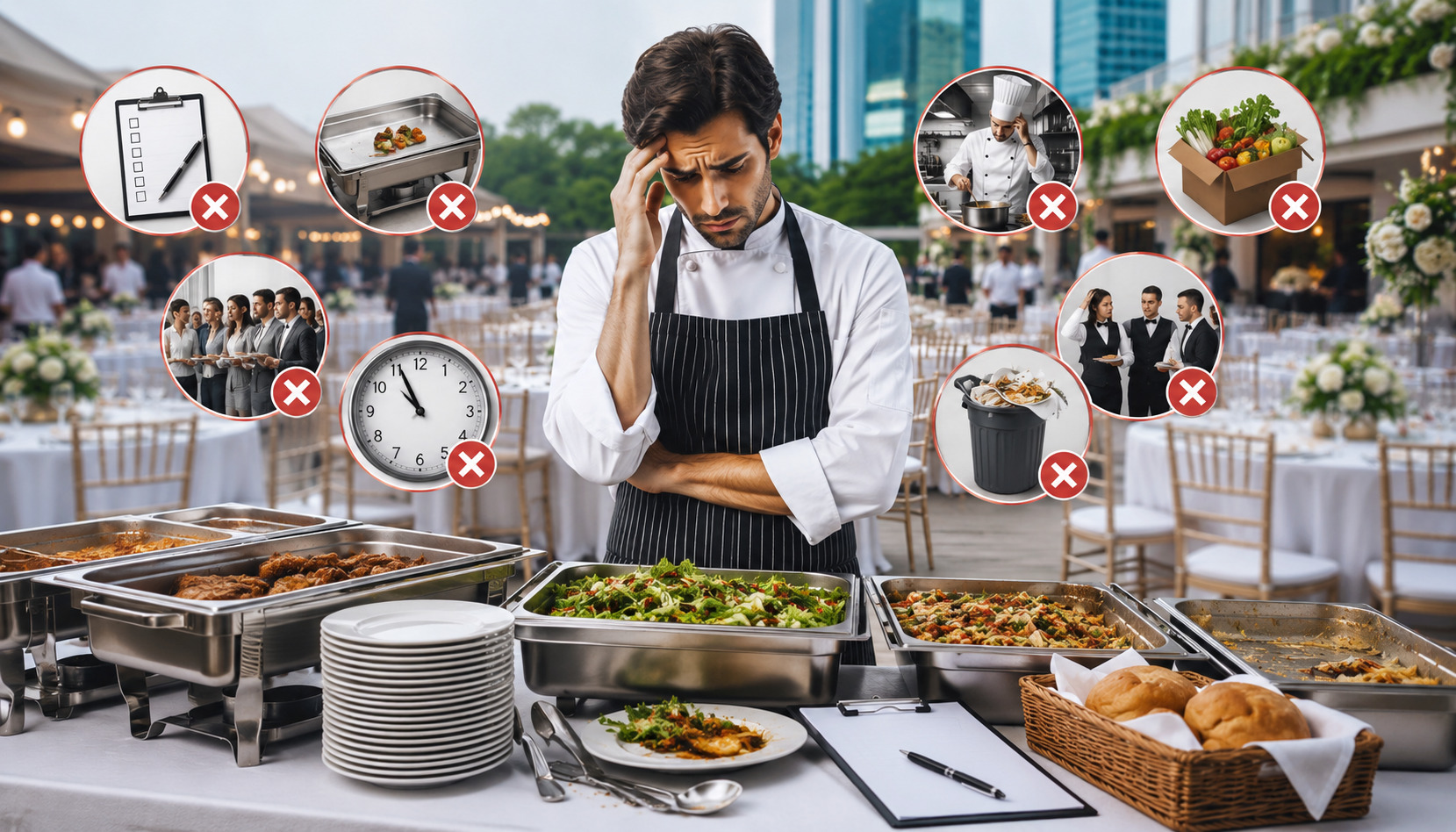
One of the most common mistakes in Delaware event catering planning is underestimating the guest count. Even a small miscalculation can lead to food shortages, not enough seating, too few plates, longer lines, and stressed staff. Always confirm whether the guest count includes children, vendors, volunteers, speakers, performers, and event staff.
Another mistake is booking catering too late. Large events require more planning, especially during busy wedding, graduation, holiday, and fundraising seasons. Waiting too long can limit your options and increase costs for rentals, staffing, and menu sourcing.
Ignoring venue restrictions is another major issue. Some venues limit cooking methods, alcohol service, open flames, delivery times, trash disposal, or outside vendors. These restrictions should be reviewed before signing a catering contract.
Choosing only based on price can also backfire. A lower quote may exclude staffing, rentals, setup, cleanup, or service equipment. It may also assume a simpler service level than your event requires. Compare what is included, not just the total.
Poor communication creates avoidable problems. Caterers need updates about guest count, timeline changes, dietary needs, room layout, vendor meals, rental adjustments, and venue rules. Confirm important details in writing so everyone has the same expectations.
Finally, do not overlook cleanup. Large events generate trash, leftover food, used linens, dirty dishes, packaging, and rental items. Confirm who handles each cleanup task and when the venue must be cleared.
Best Practices for Smooth Large Event Catering
Successful large event catering starts early and stays organized. Begin by defining your event goals, guest count, budget, venue details, and preferred service style. Then contact caterers with enough information for them to provide realistic guidance. A strong proposal should reflect your actual event, not a generic package.
Schedule a tasting when appropriate, especially for weddings, galas, and formal banquets. Tastings help you evaluate flavor, presentation, portion size, and menu balance. However, remember that event-day execution also depends on staffing, logistics, and timing. A great tasting should be paired with a strong operations plan.
Review contracts carefully. Confirm menu items, service style, staffing, rentals, setup, cleanup, payment schedule, final guest count deadline, cancellation policy, overtime charges, insurance requirements, alcohol responsibilities, and what happens if the event changes.
For licensing and verification questions, this guide on licensed caterers in Delaware can help you understand what to check before hiring.
Create backup plans for outdoor events, weather changes, power limitations, late arrivals, guest count increases, and venue access issues. Share updates early with the caterer rather than waiting until the final week.
Assign one point person for catering communication. This may be the planner, venue coordinator, committee chair, office manager, or trusted family member. The point person should know the timeline, guest count, vendor meal plan, dietary list, and approval process for day-of decisions.
FAQs About Catering for Large Delaware Events
How far in advance should I book catering for a large event?
Book catering as early as possible once your event date, venue, and estimated guest count are confirmed. Large weddings, corporate events, galas, school banquets, and fundraisers require more coordination, staffing, rentals, and menu planning than smaller gatherings.
What catering style works best for large events?
The best catering style depends on your event schedule, venue layout, budget, and guest experience goals. Buffets work well for variety, plated meals suit formal events, food stations support guest movement, and cocktail-style service is ideal for receptions and networking events.
How many catering staff members are needed for large gatherings?
Staffing depends on guest count, service style, venue layout, bar service, timeline, and cleanup needs. Plated meals usually require more servers, while buffets may need station attendants, runners, bussers, bartenders, and an event captain.
What should be included in a catering contract?
A catering contract should include the event date, venue, guest count, menu, service style, staffing, rentals, setup details, cleanup responsibilities, payment schedule, deposit, final guarantee date, taxes, gratuity, overtime rates, cancellation terms, and change policies.
How do I estimate food quantities for large events?
Food quantities depend on the event length, time of day, service style, guest count, menu type, and whether beverages or alcohol are served. Work with your caterer to plan appropriate portions, backup quantities, and replenishment timing.
Can large event caterers handle dietary restrictions?
Yes, experienced large event caterers can usually handle vegetarian, vegan, gluten-free, dairy-free, and allergy-sensitive requests. Share dietary needs early so the caterer can plan safe preparation, labeling, storage, and service procedures.
What happens if the guest count changes?
Most caterers set a final guarantee date when the guest count becomes the basis for food ordering, staffing, and rentals. Guest count increases may be possible after that date, but they can affect pricing, staffing, and availability.
How do I compare catering quotes for large events?
Compare catering quotes by reviewing what is included, not just the total price. Look at food, labor, rentals, beverages, delivery, setup, cleanup, taxes, gratuity, overtime, linens, serving equipment, and staffing levels.
Conclusion
To Plan Catering for Large Delaware Events successfully, organizers need detailed preparation, realistic budgeting, experienced catering partners, thoughtful menu planning, strong staffing coordination, and clear communication.
Large events involve many moving parts, and catering touches nearly all of them: guest flow, timing, rentals, venue logistics, dietary needs, service style, and cleanup.
The best results come from planning early, asking practical questions, confirming details in writing, and choosing a catering plan that fits the event’s size and purpose.
Whether you are managing corporate event catering, wedding catering planning, banquet catering, school events, fundraisers, or private celebrations, a well-organized approach helps reduce stress and improve guest satisfaction.
When food service feels smooth, guests notice. They enjoy the meal, move comfortably through the event, and remember the occasion for the right reasons.